
Bank Reconciliation Statement
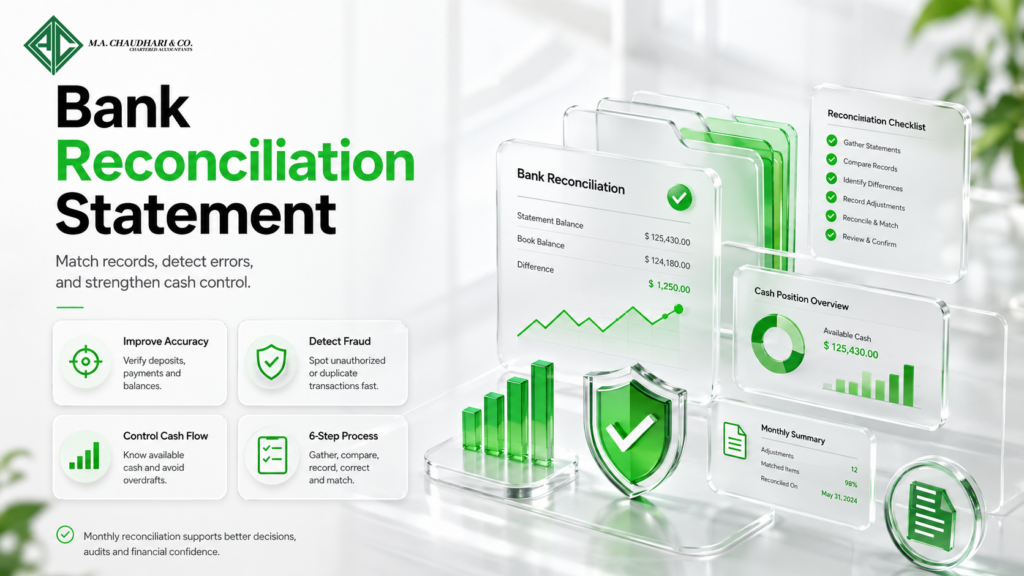
A bank reconciliation statement is one of the most important financial documents for any business. It compares the balance in a company’s cash book with the balance shown on the bank statement. As a result, businesses can identify differences, correct errors, and maintain accurate financial records. Moreover, regular bank reconciliation helps prevent fraud, improve cash flow, and support better financial decisions.
Whether you own a small business or manage a large company, understanding bank reconciliation is essential. Fortunately, the process becomes simple once you know the correct steps. This guide explains everything you need to know about preparing and maintaining a bank reconciliation statement.
What Is a Bank Reconciliation Statement?
A bank reconciliation statement is a report that compares the company’s accounting records with the bank’s records. Its main purpose is to ensure both balances match after adjusting for outstanding transactions and recording errors.
Many transactions appear in one record before they appear in the other. Therefore, temporary differences are common. However, reconciliation helps explain those differences and confirms the accuracy of financial records.
Businesses usually prepare a bank reconciliation statement at the end of every month. Nevertheless, companies with frequent transactions may reconcile their accounts weekly or even daily.
Why Is a Bank Reconciliation Statement Important?
Preparing a bank reconciliation statement offers several advantages. It improves financial accuracy while reducing accounting mistakes. Furthermore, it provides confidence that every financial transaction has been recorded correctly.
Improves Financial Accuracy
A bank reconciliation statement helps verify every deposit and payment. Consequently, accounting records remain complete and accurate.
It also ensures that financial reports reflect the company’s actual cash position. Therefore, managers can rely on accurate information throughout the year.
Detects Fraud and Unauthorized Transactions
Regular reconciliation helps identify suspicious transactions quickly. As a result, businesses can investigate unusual withdrawals before they create major financial losses.
Additionally, businesses can detect duplicate payments, unauthorized transfers, and missing deposits more effectively.
Strengthens Cash Flow Management
Cash flow plays a critical role in business success. Therefore, accurate bank balances help companies understand how much cash is available.
Better visibility also improves payment planning and reduces the risk of overdrafts.
Supports Better Financial Decisions
Business owners depend on reliable financial information every day. Therefore, accurate reconciliation supports budgeting, forecasting, and investment planning.
Moreover, correct financial records reduce uncertainty during strategic decision-making.
Simplifies Financial Audits
Well-prepared reconciliation statements provide clear supporting evidence during audits. Consequently, auditors spend less time verifying financial records.
Organized documentation also improves compliance with accounting standards and internal controls.
Key Components of a Bank Reconciliation Statement
Every bank reconciliation statement contains several essential sections. Understanding each component makes the reconciliation process much easier.
Opening Balance
The opening balance represents the ending balance from the previous reconciliation period. It provides the starting point for comparing financial records.
Cash Book Balance
The cash book balance includes every payment, receipt, transfer, and adjustment recorded by the business.
Businesses should update the cash book regularly to avoid missing transactions.
Bank Statement Balance
The bank statement balance reflects all transactions processed by the bank during the statement period.
However, some recent transactions may not appear immediately because banks require processing time.
Outstanding Checks
Outstanding checks are payments issued by the business but not yet cleared by the bank.
Although they reduce the cash book balance, they remain absent from the bank statement until processing is complete.
Deposits in Transit
Deposits in transit are funds already recorded by the business but not yet credited by the bank.
These deposits usually appear on the following bank statement after processing is complete.
Bank Charges and Service Fees
Banks often deduct monthly service fees automatically. Therefore, businesses must record these expenses in their accounting system.
Ignoring bank charges may create unnecessary differences during reconciliation.
Interest Earned
Some business accounts earn interest each month. The bank records this income automatically.
Therefore, accountants should update the cash book to include the additional income.
Errors and Adjustments
Errors sometimes occur in both accounting records and bank statements. Consequently, reconciliation identifies these mistakes before they affect financial reports.
Businesses should investigate every difference carefully and make the necessary corrections.
How to Prepare a Bank Reconciliation Statement
Preparing a bank reconciliation statement is straightforward when you follow a structured process. Each step helps eliminate discrepancies and ensures your financial records remain accurate.
Step 1: Gather Financial Documents
Collect the latest bank statement and the company’s cash book for the same accounting period. Ensure both documents are complete before starting the reconciliation process.
Having accurate records saves time and reduces the chance of overlooking important transactions.
Step 2: Compare Deposits
Match every deposit recorded in the cash book with the deposits listed on the bank statement. Then identify any deposits that have not yet reached the bank.
These deposits are known as deposits in transit. They usually appear on the following bank statement after processing.
Step 3: Verify Payments
Compare every check, bank transfer, debit card payment, and electronic transaction with the bank statement. Mark each transaction that appears in both records.
Afterward, list any outstanding checks that the bank has not processed.
Step 4: Record Bank Transactions
Banks often process transactions automatically without notifying the business immediately. Therefore, review the statement carefully for service charges, interest income, automatic payments, and direct deposits.
Next, record every missing transaction in the cash book to maintain accurate financial records.
Step 5: Correct Errors
Review both records carefully to identify recording mistakes. Sometimes a payment is entered incorrectly or a transaction is posted twice.
Correct every error immediately. Consequently, the reconciliation process becomes much more reliable.
Step 6: Calculate the Adjusted Balance
After recording all adjustments, calculate the revised balances for both the cash book and the bank statement.
The final adjusted balances should match exactly. If they do not, review every transaction again until the difference is resolved.
Common Reasons for Differences in Bank Reconciliation
Differences between accounting records and bank statements are common. However, understanding their causes makes reconciliation much easier.
Outstanding Checks
Outstanding checks remain unpaid by the bank at the statement date. Therefore, they appear only in the company’s accounting records.
Deposits in Transit
Businesses may record deposits before the bank processes them. Consequently, these deposits create temporary differences.
Bank Service Charges
Monthly maintenance fees, transaction charges, and other banking costs often appear only on the bank statement until recorded by the business.
Interest Income
Banks automatically add interest to eligible accounts. Businesses should record this income promptly to avoid reconciliation differences.
Automatic Payments and Deposits
Loan payments, subscriptions, taxes, and customer deposits may be processed directly by the bank. Therefore, businesses must update their accounting records regularly.
Data Entry Errors
Typing mistakes, duplicate entries, or incorrect amounts can create discrepancies. Reviewing each transaction carefully helps eliminate these errors.
Best Practices for Accurate Bank Reconciliation
Following proven reconciliation practices improves financial accuracy and saves valuable time.
Reconcile Accounts Every Month
Monthly reconciliation helps identify problems before they become serious. It also keeps financial information current and reliable.
Maintain Organized Financial Records
Store invoices, receipts, bank statements, and payment confirmations in an organized system. Proper documentation makes reconciliation much faster.
Use Accounting Software
Modern accounting software automates transaction matching and highlights discrepancies instantly. As a result, businesses reduce manual work and improve efficiency.
Review Transactions Regularly
Do not wait until the end of the year to review financial records. Instead, monitor transactions throughout the month for better accuracy.
Separate Accounting Responsibilities
Assign different employees to record, approve, and review transactions whenever possible. This practice strengthens internal controls and reduces fraud risks.
Common Mistakes to Avoid During Bank Reconciliation
Even experienced accountants can make reconciliation mistakes. However, avoiding these common errors improves financial accuracy and saves valuable time.
Ignoring Small Differences
Some businesses overlook minor discrepancies because they seem unimportant. However, even a small difference may indicate a larger accounting issue. Therefore, investigate every mismatch before completing the reconciliation.
Delaying the Reconciliation Process
Waiting several months to reconcile bank accounts makes the process more difficult. Moreover, missing transactions become harder to identify over time. For this reason, reconcile your accounts every month.
Failing to Record Bank Charges
Banks often deduct service fees automatically. If these charges are not entered into the cash book, the balances will not match. Consequently, always review your bank statement carefully.
Recording Duplicate Transactions
Entering the same payment or deposit twice creates unnecessary discrepancies. Therefore, verify each transaction before posting it to your accounting records.
Not Reviewing Outstanding Checks
Outstanding checks remain a common cause of reconciliation differences. Businesses should monitor these checks regularly and confirm when the bank clears them.
Benefits of Regular Bank Reconciliation
Regular bank reconciliation provides more than accurate financial records. It also improves overall financial management and business performance.
Better Financial Control
Reconciliation gives business owners complete visibility into cash movements. As a result, they can monitor spending and manage finances with confidence.
Improved Cash Flow Planning
Knowing the exact account balance helps businesses plan future payments. Consequently, companies avoid cash shortages and unnecessary overdraft fees.
Stronger Fraud Prevention
Frequent reconciliation allows businesses to detect unauthorized transactions quickly. Therefore, corrective action can be taken before significant losses occur.
Accurate Financial Reporting
Reliable accounting records produce trustworthy financial statements. Moreover, accurate reports support investors, lenders, and management decisions.
Greater Business Confidence
Business owners can make informed decisions when financial records are accurate. Consequently, they can focus on growth instead of correcting accounting mistakes.
How Accounting Software Simplifies Bank Reconciliation
Technology has transformed the reconciliation process. Today, most accounting software includes automatic bank reconciliation features that reduce manual work.
Modern accounting software can:
- Import bank transactions automatically.
- Match payments and deposits within seconds.
- Detect duplicate or missing transactions.
- Generate reconciliation reports instantly.
- Reduce human errors.
- Save valuable accounting time.
- Improve financial accuracy.
- Support audit preparation.
Therefore, businesses of every size benefit from using accounting software to manage bank reconciliation efficiently.
Tips for Maintaining Accurate Financial Records
Maintaining accurate financial records requires consistency and attention to detail. Fortunately, a few simple habits can improve the reconciliation process.
- Update accounting records every day.
- Keep all receipts and invoices organized.
- Review bank statements as soon as they arrive.
- Record every transaction immediately.
- Monitor automatic payments regularly.
- Back up financial data securely.
- Use reliable accounting software.
- Schedule monthly bank reconciliations.
By following these practices, businesses can maintain accurate books throughout the year.
Conclusion
A bank reconciliation statement is an essential tool for maintaining accurate financial records and improving business performance. It helps businesses compare accounting records with bank statements, identify discrepancies, and correct errors before they become costly problems. Moreover, regular reconciliation strengthens internal controls, improves cash flow management, and supports informed financial decisions.
Whether you operate a small business or a large organization, preparing a bank reconciliation statement every month is a smart financial habit. Furthermore, using modern accounting software makes the process faster, easier, and more accurate. With consistent reconciliation practices, businesses can protect their finances, reduce errors, and build long-term financial stability.
Frequently Asked Questions (FAQs)
1. What is a bank reconciliation statement?
A bank reconciliation statement compares the cash book balance with the bank statement balance to identify and explain any differences.
2. Why is a bank reconciliation statement important?
It improves financial accuracy, detects fraud, prevents accounting errors, and ensures reliable financial reporting.
3. How often should a bank reconciliation statement be prepared?
Most businesses prepare a bank reconciliation statement every month. However, companies with high transaction volumes may reconcile weekly or daily.
4. What causes differences between the cash book and the bank statement?
Common causes include outstanding checks, deposits in transit, bank charges, interest income, automatic payments, and recording errors.
5. Can accounting software automate bank reconciliation?
Yes. Modern accounting software imports bank transactions, matches records automatically, identifies discrepancies, and generates reconciliation reports with minimal manual effort.