
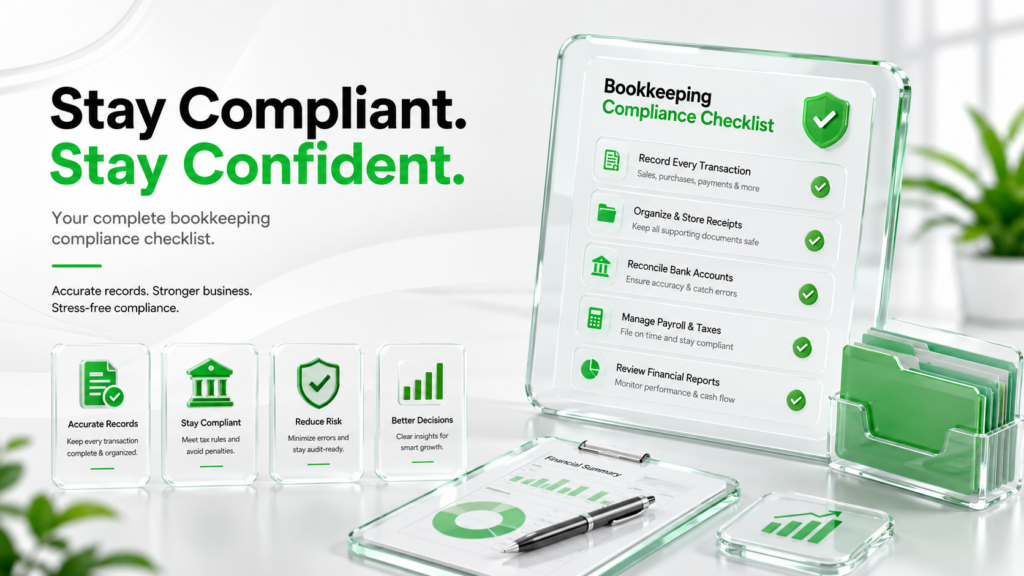
Bookkeeping Compliance Checklist
Running a successful business requires more than selling products or delivering services. A Bookkeeping Compliance Checklist is an essential tool that helps you maintain accurate financial records, meet legal requirements, and stay prepared for tax season throughout the year. Whether you manage a startup, a small business, or a growing company, following a well-organized Bookkeeping Compliance Checklist reduces errors, improves financial accuracy, and helps you make better business decisions. Many business owners only think about bookkeeping when tax deadlines approach, but using a Bookkeeping Compliance Checklist as part of your regular routine keeps your records organized all year long. Accurate financial records improve cash flow management, simplify reporting, and build trust with banks, investors, and government agencies. By following a structured Bookkeeping Compliance Checklist, you can reduce stress, avoid penalties, strengthen compliance, and gain a clear understanding of your business’s financial health with confidence.
What Is a Bookkeeping Compliance Checklist?
A Bookkeeping Compliance Checklist is a step-by-step guide that helps businesses record financial information correctly while following accounting standards and tax regulations. It covers every important bookkeeping task, from recording transactions and storing receipts to preparing financial statements and filing taxes. Instead of waiting until the end of the year to organize financial records, businesses use this checklist throughout the year to keep everything accurate and up to date.
Good bookkeeping is not only about avoiding penalties. It also helps business owners understand where money comes from, where it goes, and how the business performs over time. Accurate records support better budgeting, stronger cash flow, and smarter business planning. They also make it easier to apply for loans, attract investors, or prepare for an audit because all financial information is organized and easy to access.
Modern accounting software has made bookkeeping much easier. Cloud-based platforms can import bank transactions, create invoices, and generate reports automatically. Even with automation, business owners should review their financial records regularly to ensure every transaction has been recorded correctly.
Why Every Business Needs a Bookkeeping Compliance Checklist
Every business, regardless of its size, benefits from maintaining accurate financial records. A Bookkeeping Compliance Checklist provides a consistent process that keeps bookkeeping organized throughout the year. Instead of searching for receipts or correcting errors during tax season, business owners stay prepared by completing small bookkeeping tasks regularly.
Accurate bookkeeping also improves decision-making. Business owners can monitor income, control expenses, and understand cash flow without relying on estimates. Financial reports become more reliable because every transaction has been recorded correctly. This information helps businesses create realistic budgets, identify profitable opportunities, and reduce unnecessary spending.
Compliance also builds confidence among lenders, investors, and business partners. Before approving loans or investments, financial institutions often review financial statements. Businesses with organized bookkeeping demonstrate professionalism and reduce concerns about financial management. Following a Bookkeeping Compliance Checklist also helps companies avoid fines, penalties, and delays caused by incomplete financial records.
Common Bookkeeping Compliance Challenges
Many businesses struggle with bookkeeping because they postpone financial tasks until they become overwhelming. Recording transactions weeks or months after they occur increases the chance of missing receipts, duplicate entries, and inaccurate reports. Even small bookkeeping mistakes can create larger problems during tax preparation or financial audits.
Another common issue is mixing personal and business expenses. Using one bank account for both personal and business purchases makes it difficult to track expenses accurately. It also creates confusion when preparing financial statements or claiming tax deductions. Opening a dedicated business bank account solves this problem and improves financial transparency.
Growing businesses often face additional challenges because transaction volumes increase over time. Manual bookkeeping may work for a small startup, but larger businesses usually need accounting software to manage invoices, payroll, expenses, and financial reporting efficiently. Regular bookkeeping reviews help identify errors before they become costly problems.
Essential Bookkeeping Compliance Checklist
1. Maintain Accurate Financial Records
Every bookkeeping system begins with accurate financial records. Record every sale, purchase, payment, refund, loan, and expense as soon as it happens. Delaying bookkeeping increases the risk of forgotten transactions and incorrect reports. Businesses should create a daily or weekly routine that keeps financial records updated throughout the year.
Consistency is just as important as accuracy. Record similar transactions using the same categories every time. This approach creates reliable reports that allow meaningful comparisons between different months and years. A well-maintained Bookkeeping Compliance Checklist helps ensure every financial record remains complete and organized.
2. Record Every Business Transaction
Every business transaction matters, regardless of its size. Small cash purchases, customer payments, supplier invoices, bank fees, loan repayments, and inventory purchases all affect financial reports. Recording every transaction provides a complete picture of business performance.
Each transaction should include supporting documents such as receipts, invoices, contracts, or payment confirmations. Digital copies are often easier to organize than paper records because employees can search and retrieve them quickly. Cloud storage also reduces the risk of losing important documents during audits or tax preparation.
Complete transaction records improve budgeting, financial forecasting, and year-end reporting. They also provide clear evidence if government agencies request additional documentation.
3. Separate Personal and Business Finances
One of the simplest ways to improve bookkeeping accuracy is to separate personal and business finances. Use dedicated business bank accounts and business credit cards for company expenses. Avoid paying personal bills from business accounts or recording personal purchases as business expenses.
Keeping finances separate makes bookkeeping much easier. Business owners can quickly review operating costs, prepare tax returns, and reconcile bank accounts without sorting through personal transactions. It also strengthens financial credibility when applying for business loans or working with investors.
Clear financial separation reduces confusion, improves reporting accuracy, and supports better compliance with tax regulations.
4. Reconcile Bank Accounts Every Month
Bank reconciliation compares bookkeeping records with bank statements to ensure every transaction matches. Businesses should complete this process at least once each month. Regular reconciliations help identify missing transactions, duplicate entries, bank errors, and unauthorized charges before they create larger problems.
Monthly reconciliations also improve cash flow management because business owners always know their actual account balances. Accurate bank records reduce the risk of overdrafts and make financial reports more reliable.
Many accounting software platforms automate parts of the reconciliation process, but business owners should still review the results carefully. A monthly review strengthens the overall Bookkeeping Compliance Checklist and keeps financial records accurate.
5. Organize Supporting Documents
Every financial transaction should have supporting documentation whenever possible. Receipts, invoices, payroll records, supplier agreements, tax forms, expense reports, and contracts provide evidence that financial records are accurate.
Digital document management systems make organization much easier. Businesses can scan paper receipts, store them securely in the cloud, and retrieve them instantly when needed. Creating standardized folder names and filing systems also saves time during audits and tax preparation.
Well-organized documents improve compliance, reduce stress, and support accurate financial reporting throughout the year.
6. Manage Payroll Compliance Carefully
Payroll involves much more than paying employees on time. Businesses must calculate wages correctly, deduct taxes, manage employee benefits, and comply with labor laws. Even small payroll mistakes can lead to penalties, unhappy employees, and additional administrative work.
Payroll software simplifies these tasks by automating calculations and maintaining detailed employee records. Even so, businesses should review payroll reports regularly to ensure tax rates, overtime calculations, and benefit deductions remain accurate.
Maintaining accurate payroll records is an essential part of every Bookkeeping Compliance Checklist because payroll affects both financial reporting and tax compliance.
7. Monitor Tax Obligations Throughout the Year
Tax compliance should never become a last-minute task. Businesses often need to manage income tax, payroll tax, sales tax, or other local tax requirements depending on their location and business structure. Keeping bookkeeping records updated throughout the year makes tax preparation much easier.
Business owners should also set aside money regularly for future tax payments. This habit improves cash flow management and prevents financial stress when tax deadlines arrive. Organized bookkeeping helps businesses identify deductible expenses accurately while reducing the chance of filing incorrect tax returns.
A reliable Bookkeeping Compliance Checklist reminds business owners to review tax obligations every month rather than waiting until the end of the financial year.
8. Prepare Financial Statements Regularly
Preparing financial statements is one of the most important steps in every Bookkeeping Compliance Checklist. These reports show how your business performs and help you make informed financial decisions. Every business should prepare three essential financial statements: the Income Statement, Balance Sheet, and Cash Flow Statement. While many small businesses prepare these reports every month, larger companies often generate them weekly using cloud accounting software.
The Income Statement shows whether your business made a profit or a loss during a specific period. It compares revenue with expenses, allowing you to evaluate profitability. The Balance Sheet provides a snapshot of your business by listing assets, liabilities, and owner’s equity. It helps you understand your company’s financial position at a specific date. The Cash Flow Statement tracks the movement of cash into and out of your business, making it easier to manage daily operations and future expenses.
Preparing these reports consistently improves financial planning and supports better decision-making. Banks, investors, and government agencies often request financial statements before approving loans, reviewing tax returns, or evaluating a company’s financial health. When your bookkeeping records remain accurate, creating reliable financial statements becomes much easier.
9. Protect Financial Data
Keeping financial records safe is another essential part of a Bookkeeping Compliance Checklist. Businesses store valuable information such as customer payments, payroll records, tax documents, supplier contracts, and bank account details. Losing this information can interrupt operations, damage customer trust, and create legal problems.
Use strong passwords, multi-factor authentication, encrypted cloud storage, and secure internet connections to protect financial information. Limit access to bookkeeping records so only authorized employees can view or edit sensitive data. Assign different permission levels based on each employee’s responsibilities to reduce security risks.
Regular backups are equally important. Hardware failures, cyberattacks, accidental deletions, or natural disasters can destroy years of financial records if no backup exists. Most cloud accounting platforms create automatic backups, but businesses should still verify that their recovery process works correctly. Protecting financial information not only supports compliance but also ensures business continuity during unexpected situations.
Best Practices for a Bookkeeping Compliance Checklist
Use Cloud Accounting Software
Cloud accounting software has transformed bookkeeping by automating many routine tasks. Modern platforms import bank transactions, generate invoices, categorize expenses, calculate taxes, and create financial reports automatically. Automation reduces manual data entry and lowers the chance of human error.
Cloud software also gives business owners real-time access to financial information from anywhere with an internet connection. Instead of waiting for monthly reports, you can monitor revenue, expenses, and cash flow whenever needed. This visibility helps you make faster and more informed business decisions.
Another advantage is collaboration. Business owners, accountants, and tax professionals can securely access the same financial records without exchanging multiple spreadsheet versions. Automatic software updates also help businesses stay aligned with changing accounting standards and tax regulations.
Perform Internal Bookkeeping Reviews
A Bookkeeping Compliance Checklist works best when businesses review their financial records regularly. Monthly or quarterly internal reviews help identify bookkeeping errors before they become expensive problems. These reviews should confirm that transactions have been recorded correctly, bank accounts have been reconciled, payroll has been processed accurately, and supporting documents remain organized.
Regular reviews also strengthen fraud prevention. Duplicate payments, unauthorized transactions, or incorrect bookkeeping entries often become easier to detect when records are reviewed consistently. Fixing small issues early usually saves both time and money.
Many successful businesses create a standard review checklist that employees follow every month. This process ensures bookkeeping remains consistent regardless of who performs the work.
Work with Accounting Professionals
Even businesses that manage daily bookkeeping internally can benefit from professional accounting advice. Certified accountants understand changing tax laws, accounting standards, and reporting requirements. Their expertise helps businesses avoid compliance issues while improving financial management.
Professional accountants assist with year-end adjustments, tax planning, financial statement preparation, payroll compliance, and audit support. They can also identify tax-saving opportunities and recommend better bookkeeping procedures that improve efficiency.
Working with an accountant does not replace good bookkeeping. Instead, it strengthens your Bookkeeping Compliance Checklist by ensuring your financial records remain accurate and compliant throughout the year.
Common Bookkeeping Compliance Checklist Mistakes to Avoid
Many bookkeeping problems begin with simple mistakes that grow over time. One of the most common errors is delaying transaction entries. Waiting until the end of the month increases the chance of forgotten expenses, duplicate entries, and missing receipts. Recording transactions promptly keeps financial records accurate and reduces stress during tax season.
Another common mistake is failing to keep supporting documents. Receipts, invoices, contracts, and payment confirmations provide proof that transactions are legitimate. Without these records, businesses may struggle during audits or lose valuable tax deductions.
Some business owners also skip monthly bank reconciliations. This practice allows bank errors, duplicate payments, or unauthorized transactions to remain unnoticed. Regular reconciliations help maintain accurate financial statements and improve cash flow management.
Mixing personal and business expenses creates additional bookkeeping challenges. Separate business accounts simplify bookkeeping, improve financial transparency, and make tax preparation much easier.
Finally, relying only on spreadsheets increases the likelihood of manual errors. Modern accounting software provides automation, secure backups, and built-in reporting features that improve accuracy while saving valuable time.
Bookkeeping Compliance Checklist Summary
| Compliance Task | Recommended Frequency | Importance |
|---|---|---|
| Record financial transactions | Daily | High |
| Organize receipts and invoices | Weekly | High |
| Reconcile bank accounts | Monthly | High |
| Review payroll records | Every payroll cycle | High |
| Monitor tax obligations | Monthly | High |
| Prepare financial statements | Monthly | High |
| Back up financial records | Daily | High |
| Conduct internal bookkeeping reviews | Quarterly | Medium |
| Review accounting policies | Annually | Medium |
| Consult an accounting professional | Annually or as needed | High |
Conclusion
A Bookkeeping Compliance Checklist is more than a list of accounting tasks. It is a practical system that helps businesses maintain accurate financial records, comply with tax laws, and prepare for audits with confidence. Following a structured checklist keeps bookkeeping organized throughout the year, making it easier to monitor cash flow, prepare financial statements, and make informed business decisions.
Technology has made bookkeeping faster and more efficient, but software alone cannot guarantee compliance. Businesses still need consistent bookkeeping habits, organized documentation, regular bank reconciliations, and ongoing financial reviews. Combining these practices with reliable accounting software and professional advice creates a strong financial foundation for long-term success.
Whether you operate a small startup or an established company, following a Bookkeeping Compliance Checklist protects your business from costly mistakes while supporting sustainable growth. Accurate financial records not only improve compliance but also give you the confidence to plan for the future and seize new opportunities.
Frequently Asked Questions
1. What is a Bookkeeping Compliance Checklist?
A Bookkeeping Compliance Checklist is a structured list of bookkeeping tasks that helps businesses maintain accurate financial records, meet tax requirements, prepare financial statements, and stay ready for audits throughout the year.
2. How often should bookkeeping records be updated?
Businesses should update bookkeeping records daily or weekly. Frequent updates reduce errors, improve financial visibility, and make monthly bank reconciliations much easier.
3. Why are bank reconciliations important?
Bank reconciliations compare bookkeeping records with bank statements to identify missing transactions, duplicate entries, unauthorized charges, and bank errors before they become larger financial problems.
4. Can accounting software improve bookkeeping compliance?
Yes. Modern accounting software automates transaction recording, invoicing, reporting, bank reconciliations, and financial backups. These features improve accuracy while saving time and supporting bookkeeping compliance.
5. Should small businesses hire professional accountants?
Yes. Even if business owners manage daily bookkeeping themselves, professional accountants can assist with tax planning, financial reporting, compliance reviews, and audit preparation. Their expertise helps businesses avoid costly mistakes and improve financial management.