
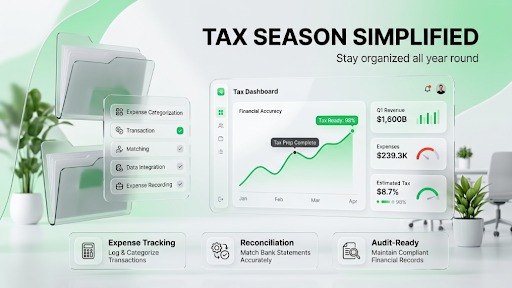
Bookkeeping for Tax Preparation
Preparing taxes can feel overwhelming, especially if financial records are incomplete or disorganized. Many business owners wait until tax season to gather receipts, invoices, bank statements, and expense records, only to discover missing information or accounting errors that delay filing. Proper bookkeeping for tax preparation eliminates this stress by keeping financial records organized throughout the year. Instead of scrambling to locate documents at the last minute, businesses with accurate bookkeeping can prepare tax returns more efficiently while reducing the risk of costly mistakes.
Good bookkeeping involves much more than recording income and expenses. It includes maintaining detailed financial records, organizing receipts, reconciling bank accounts, tracking deductible expenses, monitoring accounts receivable and payable, and generating financial reports that accurately reflect business performance. These records provide the information needed to calculate taxable income, support deductions, and comply with tax regulations. They also help business owners understand cash flow, profitability, and overall financial health.
Whether you operate as a freelancer, sole proprietor, partnership, limited liability company (LLC), or corporation, maintaining accurate bookkeeping is one of the most effective ways to simplify tax preparation. This guide explains the importance of bookkeeping for taxes, outlines the records every business should maintain, provides a step-by-step bookkeeping process, and shares practical tips to help you prepare for tax season with confidence.
What Is Bookkeeping for Tax Preparation?
Bookkeeping for tax preparation is the process of recording, organizing, and maintaining financial transactions throughout the year so that tax returns can be prepared accurately and efficiently. Rather than collecting financial information only when tax deadlines approach, bookkeeping creates an organized record of income, expenses, assets, liabilities, and other financial activities as they occur. These records become the foundation for calculating taxable income and claiming legitimate business deductions.
Effective bookkeeping includes documenting every financial transaction, maintaining invoices and receipts, reconciling bank and credit card accounts, categorizing expenses correctly, and generating financial statements such as profit and loss reports and balance sheets. These activities ensure that financial records remain complete and consistent, reducing the likelihood of missing deductions or reporting inaccurate information on tax returns.
Modern bookkeeping software has made tax preparation considerably easier by automating many repetitive tasks. Cloud-based accounting platforms can import bank transactions, categorize expenses, store digital receipts, and generate tax-ready reports automatically. These features not only save time but also improve accuracy and simplify collaboration with accountants and tax professionals.
Why Accurate Bookkeeping Matters for Taxes
Accurate bookkeeping plays a vital role in successful tax preparation because tax returns are only as reliable as the financial records supporting them. Every deduction, income figure, and financial statement reported on a tax return should be backed by organized documentation. Businesses with incomplete records often spend unnecessary time searching for missing receipts, correcting accounting errors, or responding to requests for additional documentation during audits.
Maintaining accurate books throughout the year also improves financial visibility beyond tax compliance. Business owners gain a clearer understanding of revenue trends, operating expenses, profitability, and cash flow, enabling better budgeting and business planning. Instead of viewing bookkeeping as a once-a-year tax requirement, successful businesses use it as an ongoing financial management tool that supports informed decision-making.
Consistent bookkeeping also reduces stress during tax season. When financial records are organized and up to date, preparing tax returns becomes significantly faster. Accountants spend less time correcting bookkeeping errors, businesses avoid unnecessary penalties, and tax filings can often be completed well before filing deadlines.
Key Benefits
Maintaining accurate bookkeeping throughout the year provides numerous advantages that extend well beyond tax filing. Organized financial records improve business operations while making tax preparation considerably more efficient.
Some of the most important benefits include:
- Faster tax preparation
- Accurate income reporting
- Better expense tracking
- Easier deduction identification
- Reduced risk of tax errors
- Simplified audit preparation
- Improved cash flow monitoring
- Better financial reporting
- Easier collaboration with accountants
- More informed business decisions
- Reduced stress during tax season
- Greater regulatory compliance
These benefits allow businesses to focus on growth while remaining financially organized and prepared for tax obligations.
Common Tax Preparation Challenges
Many businesses experience unnecessary difficulties during tax season because bookkeeping has been neglected throughout the year. Missing receipts, uncategorized expenses, unreconciled bank accounts, and incomplete income records frequently delay tax preparation and increase the likelihood of filing errors. Waiting until the final weeks before filing deadlines often creates additional pressure, making it more difficult to identify missing information or resolve discrepancies.
Businesses may also struggle with separating personal and business expenses, tracking deductible costs, managing payroll records, or reconciling credit card transactions. Without consistent bookkeeping practices, these issues become increasingly difficult to resolve as transaction volumes grow. Establishing organized bookkeeping procedures early helps prevent these common challenges and supports smoother tax preparation each year.
Essential Records You Should Keep
Successful tax preparation begins with maintaining complete and well-organized financial records. Every business, regardless of size, should retain documentation that supports reported income, business expenses, tax deductions, and financial transactions. These records provide evidence during tax preparation and may also be required if tax authorities request additional information.
Important records include sales invoices, customer payments, supplier invoices, purchase receipts, bank statements, credit card statements, payroll records, tax documents, loan agreements, asset purchase records, depreciation schedules, inventory records, mileage logs, utility bills, insurance payments, rent expenses, and digital copies of receipts. Businesses should also retain copies of previously filed tax returns and supporting financial statements for future reference.
Digital bookkeeping software makes record management much easier by allowing businesses to upload receipts, organize documents electronically, and store financial information securely in the cloud. Maintaining organized records throughout the year reduces administrative work during tax season while improving overall financial management.
Step-by-Step Bookkeeping for Tax Preparation
Organize Financial Documents
The first step in preparing for tax season is organizing all financial documents in a consistent and easily accessible system. Every transaction should have supporting documentation, whether in paper or digital format. This includes invoices, receipts, contracts, bank statements, credit card statements, payroll reports, and tax notices. Organizing records monthly instead of annually prevents important documents from being misplaced and significantly reduces preparation time when tax deadlines approach.
Digital document management offers additional advantages by allowing businesses to scan receipts, categorize expenses automatically, and retrieve records instantly whenever needed. Cloud storage also provides secure backups, reducing the risk of losing important financial information due to damaged paperwork or computer failures. Businesses that maintain organized documentation throughout the year spend far less time searching for missing records during tax preparation.
Record Income Accurately
Accurate income recording is essential for preparing complete and compliant tax returns. Every sale, customer payment, service fee, interest payment, and other source of business income should be recorded promptly using consistent accounting methods. Delayed or incomplete income recording can create discrepancies between accounting records and bank deposits, making reconciliation more difficult and increasing the likelihood of tax reporting errors.
Businesses should also distinguish between taxable income, non-taxable income, customer deposits, refunds, and other financial transactions to ensure accurate reporting. Modern bookkeeping software simplifies this process by importing bank transactions automatically and matching them with invoices or payment records. Maintaining complete income records not only supports tax compliance but also provides valuable insights into revenue growth and overall business performance.
Track Business Expenses
Carefully tracking business expenses is one of the most important aspects of bookkeeping for tax preparation. Every legitimate business expense has the potential to reduce taxable income, but only if it is properly documented and categorized. Waiting until the end of the year to organize expenses often results in missing receipts, overlooked deductions, and inaccurate financial records. Recording expenses as they occur creates a reliable financial history that supports both tax reporting and day-to-day financial management.
Businesses should categorize expenses into consistent groups such as office supplies, utilities, rent, travel, marketing, insurance, professional services, software subscriptions, payroll, and equipment purchases. Maintaining standardized categories simplifies bookkeeping and makes financial reports easier to interpret. Digital bookkeeping software further streamlines this process by automatically importing bank transactions, matching receipts, and suggesting expense categories based on previous activity.
Supporting documentation is equally important. Every expense should be backed by invoices, receipts, contracts, or payment confirmations whenever possible. Digital receipt scanning applications allow businesses to store documents electronically, reducing paperwork while ensuring records remain available if additional documentation is required. Consistent expense tracking not only simplifies tax preparation but also provides valuable insight into spending patterns and opportunities to improve profitability.
Reconcile Bank Accounts
Bank reconciliation is the process of comparing bookkeeping records with bank and credit card statements to ensure every transaction has been recorded accurately. This step is essential because discrepancies between accounting records and bank balances can lead to incorrect financial reports and inaccurate tax returns. Performing reconciliations regularly throughout the year makes it much easier to identify missing transactions, duplicate entries, unauthorized charges, or bookkeeping errors before they become larger problems.
Most modern bookkeeping software automates much of the reconciliation process by importing bank transactions and matching them with recorded income and expenses. Although automation saves time, business owners should still review unmatched transactions carefully to confirm that every item has been categorized correctly. Small errors left unresolved can accumulate over several months, making year-end reconciliation significantly more difficult.
Monthly reconciliation also improves financial visibility by providing an accurate picture of available cash, outstanding payments, and pending deposits. Businesses that reconcile accounts consistently enter tax season with reliable financial records, reducing the amount of work required to prepare financial statements and complete tax returns.
Review Financial Reports
Generating and reviewing financial reports before tax season helps ensure bookkeeping records are complete and accurate. Reports such as the Profit and Loss Statement, Balance Sheet, Cash Flow Statement, General Ledger, and Trial Balance summarize financial activity throughout the year and provide valuable information for both tax preparation and business decision-making. Reviewing these reports regularly allows business owners to identify unusual transactions, missing entries, or unexpected changes that may require further investigation.
The Profit and Loss Statement summarizes income and expenses over a specific period, making it one of the most important documents for determining taxable business income. The Balance Sheet provides an overview of assets, liabilities, and owner’s equity, while the Cash Flow Statement tracks how money moves into and out of the business. Together, these reports provide a comprehensive view of financial health and help accountants prepare accurate tax returns.
Businesses should compare current reports with previous months or prior years to identify significant changes that may indicate bookkeeping errors or unusual business activity. Consistent financial reporting also improves budgeting, forecasting, and long-term planning by providing reliable information for management decisions beyond tax compliance.
Prepare Tax Documents
Preparing tax documents becomes much easier when bookkeeping records have been maintained consistently throughout the year. Rather than gathering financial information at the last minute, businesses can generate many required reports directly from their bookkeeping software. This includes income summaries, expense reports, payroll records, depreciation schedules, sales tax reports, and supporting documentation for deductible business expenses.
Before sharing financial records with an accountant or tax professional, review transactions for accuracy and ensure supporting documents are complete. Outstanding invoices, unpaid bills, unreconciled bank accounts, or missing receipts should be resolved before tax preparation begins. This reduces delays and minimizes the likelihood of adjustments during the tax filing process.
Businesses should also organize tax-related correspondence, previous tax returns, loan documentation, asset purchase records, payroll information, and any other documents required for filing. Maintaining both digital and physical copies of important records provides additional security and simplifies future reference if questions arise after tax returns have been submitted.
Best Bookkeeping Software for Tax Preparation
Modern bookkeeping software simplifies tax preparation by automating financial recordkeeping and generating tax-ready reports. Choosing software that matches your business requirements can significantly reduce administrative work while improving financial accuracy.
| Software | Best For | Key Strength |
|---|---|---|
| QuickBooks Online | Small Businesses | Comprehensive bookkeeping and tax reporting |
| Xero | Growing Businesses | Strong automation and unlimited users on many plans |
| Zoho Books | Small & Medium Businesses | Workflow automation and tax management |
| FreshBooks | Freelancers | Invoicing and expense tracking |
| Wave | Startups | Free bookkeeping features |
| Sage Accounting | Established Businesses | Advanced reporting and compliance |
Each platform provides features such as bank reconciliation, expense tracking, invoicing, financial reporting, and document management that simplify tax preparation while reducing manual bookkeeping.
Bookkeeping Checklist for Tax Preparation
Before filing your taxes, confirm that the following bookkeeping tasks have been completed:
- Record all business income.
- Categorize every business expense.
- Reconcile bank and credit card accounts.
- Organize invoices and receipts.
- Review payroll records.
- Verify accounts receivable and payable.
- Generate Profit and Loss and Balance Sheet reports.
- Confirm asset purchases and depreciation records.
- Review outstanding loans and liabilities.
- Back up all financial records securely.
Completing this checklist before meeting with your accountant helps ensure a smoother tax preparation process and reduces the likelihood of filing delays.
Common Mistakes to Avoid
Even businesses with good intentions can make bookkeeping errors that create unnecessary stress during tax season. Most of these mistakes are completely avoidable with consistent habits and regular financial reviews. Understanding the most common bookkeeping pitfalls can help you maintain accurate records, reduce the risk of audits, and ensure that your tax return reflects your true financial position.
One of the biggest mistakes is mixing personal and business finances. Using the same bank account or credit card for both personal and business expenses creates confusion and makes it difficult to identify deductible expenses. Opening a dedicated business bank account and using it exclusively for business transactions is one of the simplest ways to improve bookkeeping accuracy.
Another common issue is waiting until tax season to update financial records. Many business owners postpone bookkeeping for months, only to scramble through receipts, invoices, and bank statements when filing deadlines approach. This last-minute approach increases the likelihood of missing expenses, recording duplicate transactions, or overlooking taxable income. Recording transactions weekly or monthly keeps your books current and significantly reduces year-end stress.
Poor record retention is another costly mistake. Tax authorities often require businesses to keep financial records for several years. Losing receipts, invoices, payroll documents, or bank statements can make it difficult to support deductions if questions arise. Digital document storage systems and cloud-based bookkeeping software make preserving these records much easier.
Businesses also frequently misclassify expenses. For example, recording equipment purchases as office supplies or categorizing travel expenses incorrectly can affect both financial reporting and tax calculations. Using a consistent chart of accounts and reviewing expense categories regularly helps maintain accurate financial statements.
Ignoring bank reconciliations is another major problem. If bank balances are never compared with bookkeeping records, unnoticed errors may continue for months. Duplicate entries, missing transactions, unauthorized charges, or bank errors become much harder to identify over time. Monthly reconciliations ensure that your books accurately reflect your actual cash position.
Many businesses forget to account for sales tax, payroll tax, or estimated tax payments throughout the year. These obligations can accumulate into substantial liabilities if they are ignored. Maintaining a tax calendar with payment deadlines helps avoid interest charges and late payment penalties.
Depreciation is another area that business owners often overlook. Assets such as computers, machinery, furniture, and vehicles generally cannot be deducted entirely in the year of purchase. Recording fixed assets properly ensures depreciation is calculated correctly according to applicable tax rules.
Some companies fail to review financial reports before submitting tax returns. Simple mistakes like duplicated revenue, omitted expenses, incorrect account balances, or mathematical errors can significantly impact tax liability. Reviewing the Profit and Loss Statement, Balance Sheet, General Ledger, and Trial Balance before filing allows time to correct inaccuracies.
Another mistake is relying entirely on memory instead of documentation. Every deduction should have supporting evidence, including receipts, invoices, contracts, or payment confirmations. Organized documentation not only supports tax deductions but also builds confidence during financial reviews or audits.
Finally, many small businesses attempt to manage increasingly complex bookkeeping without seeking professional advice. As companies grow, tax regulations become more complicated, and professional bookkeepers or accountants can identify deductions, improve financial reporting, and ensure compliance with changing tax laws. Investing in professional guidance often saves far more money than it costs.
Conclusion
Bookkeeping for tax preparation is much more than an administrative task completed once a year. It forms the financial foundation of every successful business by ensuring that income, expenses, assets, and liabilities are recorded accurately throughout the year. Organized bookkeeping simplifies tax filing, reduces compliance risks, improves cash flow management, and provides valuable financial insights that support better business decisions.
Maintaining accurate records consistently is far easier than trying to reconstruct months of financial activity under the pressure of tax deadlines. By organizing financial documents, recording every transaction promptly, tracking deductible expenses, reconciling bank accounts regularly, reviewing financial reports, and preparing tax documents in advance, businesses can transform tax season from a stressful event into a routine process.
Modern bookkeeping software has made financial management more accessible than ever. Automation, cloud storage, bank integrations, receipt scanning, and real-time reporting reduce manual work while improving accuracy. Combined with sound bookkeeping practices and occasional guidance from accounting professionals, these tools help businesses remain compliant while maximizing legitimate tax deductions.
Whether you’re a freelancer, startup founder, online seller, or established business owner, investing time in accurate bookkeeping pays dividends well beyond tax season. Clean financial records support smarter planning, healthier cash flow, stronger decision-making, and long-term business growth. Instead of viewing bookkeeping as a burden, consider it one of the most valuable investments you can make in the financial stability and future success of your business.
Frequently Asked Questions
1. How often should bookkeeping be updated for tax preparation?
Ideally, bookkeeping should be updated weekly or at least monthly. Regular updates reduce errors, simplify bank reconciliations, and make tax preparation much easier when filing deadlines arrive.
2. What financial records should I keep for tax purposes?
You should retain invoices, receipts, bank statements, payroll records, expense reports, sales records, tax filings, loan documents, and supporting documentation for deductions. Digital copies stored securely are generally easier to organize and retrieve.
3. Can bookkeeping software automatically prepare my taxes?
Most bookkeeping software can generate financial reports and organize tax-related information, but it typically does not replace professional tax preparation. Many platforms integrate directly with tax software or allow accountants to access your records efficiently.
4. How long should business tax records be kept?
Record retention requirements vary depending on your country’s tax regulations, but many tax authorities recommend keeping financial records for at least three to seven years. Retaining records longer may be beneficial for significant business transactions or asset purchases.
5. Is hiring a professional bookkeeper worth it?
Yes, especially as your business grows. A professional bookkeeper can improve record accuracy, save valuable time, identify deductible expenses, reduce costly mistakes, and ensure your financial records remain tax-ready throughout the year.