
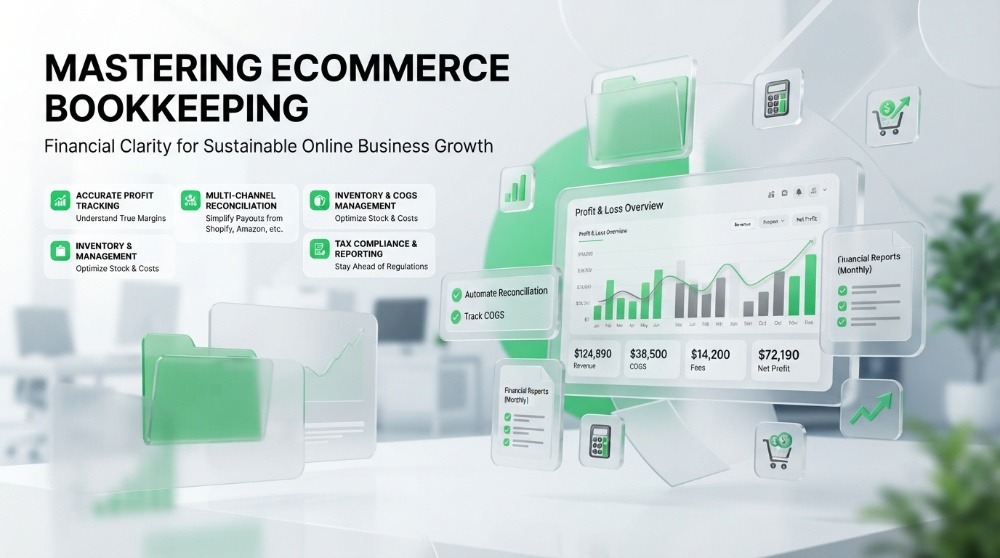
Bookkeeping for Ecommerce Business
Running an ecommerce business involves much more than selling products online. Every order generates multiple financial transactions, including product revenue, payment processing fees, shipping charges, refunds, taxes, and inventory movements. Unlike a traditional retail store, an online business may sell across multiple marketplaces such as Shopify, Amazon, Etsy, Walmart Marketplace, or WooCommerce, making bookkeeping considerably more complex. Without a structured bookkeeping system, it becomes difficult to know whether your business is genuinely profitable or simply generating impressive sales numbers.
Understanding Ecommerce Bookkeeping
Ecommerce bookkeeping is the process of recording, organizing, and managing every financial transaction generated by an online store. While the principles of bookkeeping remain the same as any other business, ecommerce introduces unique challenges that require specialized processes.
For example, a single customer purchase may involve:
- Product revenue
- Sales tax
- Payment gateway fees
- Marketplace commissions
- Shipping income
- Shipping expenses
- Inventory reduction
- Cost of Goods Sold (COGS)
- Possible future returns or refunds
Because each sale affects multiple accounts, ecommerce bookkeeping is significantly more detailed than bookkeeping for service-based businesses. As sales volume increases, automation becomes essential to avoid manual errors while maintaining accurate financial records. Modern accounting systems now integrate directly with ecommerce platforms, allowing businesses to automate transaction imports and reconciliations.
Why Accurate Bookkeeping Is Essential
Many ecommerce entrepreneurs focus heavily on revenue growth while overlooking profitability. Selling $100,000 worth of products sounds impressive, but after deducting advertising costs, marketplace fees, shipping expenses, product costs, and returns, actual profits may be much smaller than expected.
Accurate bookkeeping helps ecommerce businesses:
| Benefit | Business Impact |
|---|---|
| Accurate profit tracking | Know your real margins |
| Better inventory management | Prevent overstocking and stockouts |
| Easier tax filing | Stay compliant with tax regulations |
| Cash flow visibility | Avoid liquidity problems |
| Better business decisions | Identify profitable products and channels |
Setting Up Your Ecommerce Accounting System
Building a reliable accounting system is one of the smartest investments an ecommerce business can make. Before processing thousands of transactions, you should establish a bookkeeping framework that can grow with your business. This begins with choosing an accounting method. Most growing ecommerce businesses use the accrual accounting method because it records revenue when it is earned and expenses when they are incurred, providing a more accurate picture of profitability. Smaller businesses with simple operations may initially use cash accounting, but many eventually transition to accrual accounting as sales volume increases.
Equally important is creating a well-organized chart of accounts. Rather than using generic income and expense categories, ecommerce businesses benefit from accounts specifically designed for online sales. Typical revenue accounts include Shopify sales, Amazon sales, Etsy sales, and wholesale revenue. Expense categories often include payment processing fees, marketplace commissions, digital advertising, packaging supplies, shipping costs, software subscriptions, inventory purchases, and merchant service fees. A detailed chart of accounts makes financial reports easier to understand and helps identify which sales channels and expense categories have the greatest impact on profitability. Once this foundation is in place, your bookkeeping process becomes more efficient and scalable.
Record Sales Correctly
Recording sales accurately is one of the most critical bookkeeping responsibilities for an ecommerce business. It may seem logical to record the amount deposited into your bank account as revenue, but this approach often produces inaccurate financial statements. Marketplace deposits frequently include deductions for transaction fees, commissions, shipping adjustments, taxes collected, promotional discounts, and customer refunds. If you record only the net deposit, your revenue and expenses will both be understated.
Instead, each order should be broken into its individual financial components. The gross sale should be recorded as revenue, sales tax should be recognized as a liability rather than income, payment processing and marketplace fees should be recorded as business expenses, and shipping income should be tracked separately if customers pay for delivery. Refunds and discounts should also reduce revenue appropriately rather than being ignored. This detailed approach provides a much clearer understanding of business performance and ensures that financial reports accurately reflect your sales activity. As order volume increases, accounting integrations can automate much of this process while still preserving detailed transaction records.
Reconcile Marketplace Payouts
One of the biggest challenges in ecommerce bookkeeping is reconciling payouts from online marketplaces and payment processors. Platforms such as Shopify Payments, Amazon, Etsy, Stripe, and PayPal typically transfer funds in batches rather than depositing each customer payment individually. These payouts often include multiple orders along with deductions for transaction fees, refunds, reserve balances, and chargebacks, making reconciliation more complicated than traditional bookkeeping.
Each month or preferably each week you should compare marketplace payout reports with your accounting records. Every deposit should match the combined sales transactions after accounting for all deductions and adjustments. If the numbers do not align, investigate the differences immediately rather than postponing the review. Unreconciled accounts can hide duplicate transactions, missing sales, or accounting errors that become increasingly difficult to correct over time. Consistent reconciliation also improves confidence in your financial reports and helps identify issues such as unexpected fee increases or unauthorized deductions from marketplace accounts.
Track Inventory
Inventory management is one of the defining features of ecommerce bookkeeping because inventory directly affects both your balance sheet and your profitability. Every product purchased increases inventory assets, while every product sold reduces inventory and creates Cost of Goods Sold (COGS). If inventory records are inaccurate, profit calculations become unreliable, making it difficult to evaluate business performance or plan future purchasing decisions.
Successful ecommerce businesses perform regular inventory reviews to ensure accounting records match physical stock. Inventory counts help identify damaged goods, obsolete products, theft, supplier shortages, or data entry errors before they significantly affect financial statements. Businesses selling across multiple sales channels should also synchronize inventory levels to avoid overselling products that are no longer available. Inventory software integrated with accounting systems can automate updates, but periodic physical verification remains essential. Maintaining accurate inventory records supports better forecasting, healthier cash flow, and stronger customer satisfaction through improved product availability.
Manage Cost of Goods Sold (COGS)
Understanding Cost of Goods Sold is essential for measuring true profitability. COGS includes all direct costs associated with producing or purchasing products sold to customers. These costs typically include wholesale purchase prices, manufacturing expenses, import duties, freight charges, and other direct acquisition costs. Recording COGS accurately allows businesses to calculate gross profit, one of the most important financial metrics for evaluating performance.
Every time inventory is sold, the corresponding inventory cost should move from the balance sheet to the income statement as Cost of Goods Sold. This process ensures that expenses are recognized during the same period as the related revenue, resulting in more accurate financial reporting. Business owners should also review supplier pricing regularly because increases in manufacturing or shipping costs can quietly reduce profit margins even when sales continue growing. Monitoring COGS each month provides valuable insight into pricing strategies, supplier negotiations, and inventory purchasing decisions that directly influence long-term profitability.
Record Refunds and Returns
Product returns are an unavoidable part of ecommerce, but they should never be treated as an afterthought in your bookkeeping process. Every refund affects multiple financial accounts, including sales revenue, payment processing fees, inventory, and sometimes shipping expenses. Ignoring these adjustments can inflate reported revenue and distort profit margins, making your financial reports less reliable.
An effective bookkeeping system records refunds promptly and links them to the original sale whenever possible. Returned inventory that can be resold should be added back to inventory records, while damaged or unsellable items should be written off appropriately. Businesses should also monitor return rates by product category to identify recurring quality issues or misleading product descriptions. High return rates often indicate opportunities to improve customer satisfaction while reducing unnecessary operational costs. By treating refunds as an important financial metric rather than simply an operational inconvenience, ecommerce businesses gain valuable insights into both profitability and customer experience.
Track Shipping Costs
Shipping expenses represent a significant operating cost for many ecommerce businesses, particularly those offering free or discounted delivery. Proper bookkeeping requires separating shipping income collected from customers from the actual shipping expenses paid to carriers. Recording these amounts independently provides a clearer picture of whether your shipping strategy supports or reduces profitability.
Businesses should monitor carrier invoices, packaging costs, fulfillment fees, and shipping insurance alongside customer shipping charges. Comparing these figures regularly helps identify opportunities to negotiate better carrier rates, optimize packaging, or adjust shipping policies. Even small reductions in shipping costs can have a meaningful impact on overall profit margins, especially for businesses processing hundreds or thousands of orders each month. Accurate shipping records also improve budgeting and provide valuable data when evaluating third-party fulfillment providers or expanding into new markets.
Manage Sales Tax
Sales tax compliance has become increasingly complex for ecommerce businesses, especially those selling across multiple states or countries. Different jurisdictions have unique tax rates, filing requirements, and economic nexus thresholds, making it essential to maintain accurate bookkeeping records. Simply collecting sales tax from customers is not enough you must also track the amount owed to each tax authority and remit it on time.
A well-designed bookkeeping system separates sales tax collected from business revenue because those funds do not belong to the business. They represent a liability that must eventually be paid to the appropriate government agency. Each month, review your sales tax reports, compare them with marketplace data, and verify that all taxable and non-taxable transactions have been recorded correctly. Businesses selling through marketplaces should also understand marketplace facilitator laws, as some platforms collect and remit sales tax on behalf of sellers while others require the seller to handle compliance. Staying organized throughout the year reduces filing errors, avoids penalties, and makes tax season far less stressful.
Reconcile Payment Processors
Payment processors play a central role in ecommerce operations, but they can also introduce accounting complexities. Platforms such as Stripe, PayPal, Square, and Shopify Payments often deduct transaction fees, hold reserves, process chargebacks, and issue refunds before transferring funds to your bank account. As a result, the deposit received rarely matches your gross sales.
Monthly reconciliation ensures every payment processor transaction is accurately reflected in your accounting records. Compare processor reports with your bookkeeping software, verify that processing fees are recorded as expenses, and investigate any discrepancies immediately. Pay special attention to chargebacks, disputed transactions, and delayed payouts, as these can affect both cash flow and reported revenue. Regular reconciliation also helps identify fraudulent activity or unexpected fee increases. By maintaining accurate payment processor records, you create financial statements that truly reflect your business performance instead of relying solely on bank deposits.
Monitor Cash Flow
Many ecommerce businesses experience rapid sales growth while still struggling with cash flow. This happens because inventory purchases, advertising costs, supplier payments, and shipping expenses often occur before customer payments are fully received. Monitoring cash flow every month helps ensure that your business has enough liquidity to meet its financial obligations while continuing to grow.
Start by reviewing your cash inflows, including customer payments, marketplace payouts, and other sources of income. Then compare them against outgoing expenses such as inventory purchases, payroll, marketing campaigns, software subscriptions, loan repayments, and operating costs. If cash reserves are declining despite increasing sales, investigate the underlying causes. You may need to negotiate better payment terms with suppliers, improve inventory turnover, or accelerate customer collections. Consistent cash flow analysis provides early warning signs that allow business owners to make proactive decisions instead of reacting to financial shortages after they occur.
Review Financial Reports
Monthly financial reports transform raw bookkeeping data into meaningful business insights. Once transactions have been recorded and reconciled, generate reports that summarize your financial performance and help identify trends. Reviewing these reports regularly enables you to measure profitability, monitor expenses, evaluate sales channels, and make informed strategic decisions.
The following reports should be reviewed every month:
| Financial Report | Purpose |
|---|---|
| Profit and Loss Statement | Measures revenue, expenses, and net profit for the month. |
| Balance Sheet | Shows assets, liabilities, and owner’s equity at a specific date. |
| Cash Flow Statement | Explains how cash moved into and out of the business. |
| Inventory Valuation Report | Tracks inventory value and stock movement. |
| Sales by Channel Report | Compares revenue across platforms such as Shopify, Amazon, and Etsy. |
Instead of focusing only on total sales, analyze trends in gross profit, advertising costs, customer acquisition expenses, inventory turnover, and operating margins. Ask questions such as: Which products generate the highest profit? Which marketplace produces the best return? Are operating expenses increasing faster than revenue? These reports provide the answers needed to improve business performance and support sustainable growth.
Common Ecommerce Bookkeeping Mistakes
Bookkeeping mistakes can quietly erode profits and create serious financial problems if they go unnoticed. One of the most common errors is recording marketplace deposits as total sales rather than separating revenue, taxes, fees, and refunds. This practice understates both income and expenses, resulting in misleading financial reports. Another frequent mistake is failing to reconcile payment processors and bank accounts regularly, allowing discrepancies to accumulate over several months.
Inventory mismanagement is another challenge for many ecommerce businesses. Inaccurate inventory records lead to incorrect Cost of Goods Sold calculations, distorted profit margins, and poor purchasing decisions. Mixing personal and business expenses, failing to track shipping costs separately, ignoring sales tax liabilities, and delaying bookkeeping until tax season are additional mistakes that can become expensive over time. Establishing a consistent monthly bookkeeping routine, supported by reliable accounting software and periodic professional review, significantly reduces these risks and improves financial accuracy.
Best Bookkeeping Software for Ecommerce
Selecting the right bookkeeping software can dramatically improve efficiency and reduce manual work. Modern cloud-based accounting platforms integrate directly with ecommerce marketplaces, payment processors, inventory systems, and payroll applications, allowing transactions to flow automatically into your accounting records. The ideal solution depends on your business size, sales volume, and operational complexity.
| Software | Best For | Key Features |
|---|---|---|
| QuickBooks Online | Small and growing ecommerce businesses | Bank reconciliation, invoicing, inventory integrations, financial reporting |
| Xero | Multi-channel ecommerce sellers | Cloud accounting, inventory management, bank feeds, automation |
| Zoho Books | Businesses using Zoho products | Workflow automation, tax management, reporting dashboards |
| FreshBooks | Service-based businesses with online sales | Expense tracking, invoicing, payment collection |
| Wave | Startups and micro businesses | Free accounting, invoicing, receipt management |
Regardless of the software you choose, remember that technology is only part of the solution. Regular reviews, reconciliations, and financial analysis remain essential for maintaining accurate books and making informed business decisions.
Conclusion
Effective bookkeeping for an ecommerce business goes far beyond recording sales and expenses. It involves tracking inventory, managing Cost of Goods Sold, reconciling marketplace payouts, monitoring payment processors, recording refunds accurately, maintaining sales tax compliance, and reviewing detailed financial reports each month. These processes provide a complete picture of your business’s financial health and help you understand whether your growth is translating into sustainable profitability.
As your online store expands across multiple sales channels and processes thousands of transactions, accurate bookkeeping becomes even more valuable. Reliable financial records support better inventory planning, stronger cash flow management, easier tax preparation, and smarter strategic decisions. Whether you manage your books yourself or work with a professional accountant, establishing a consistent bookkeeping routine will save time, reduce costly mistakes, and position your ecommerce business for long-term success in an increasingly competitive marketplace.
Frequently Asked Questions (FAQs)
1. Why is ecommerce bookkeeping more complex than traditional bookkeeping?
Ecommerce businesses handle multiple payment gateways, online marketplaces, inventory movements, shipping costs, refunds, marketplace commissions, and sales tax obligations. Each sale often creates several accounting entries rather than a single transaction.
2. Should I record Shopify or Amazon payouts as revenue?
No. Marketplace payouts are usually net deposits after deducting fees, refunds, taxes, and other adjustments. You should record the gross sales separately from these deductions to maintain accurate financial statements.
3. How often should ecommerce businesses reconcile their accounts?
Bank accounts, payment processors, and marketplace payouts should ideally be reconciled weekly or at least monthly. Frequent reconciliation helps identify discrepancies before they become larger accounting problems.
4. What financial reports should an ecommerce business review every month?
The most important reports include the Profit and Loss Statement, Balance Sheet, Cash Flow Statement, Inventory Valuation Report, and Sales by Channel Report. Together, these reports provide a complete overview of financial performance.
5. Can accounting software automate ecommerce bookkeeping?
Yes. Many cloud accounting platforms integrate with ecommerce stores, payment processors, and inventory systems to automate transaction imports, reconciliations, invoicing, expense tracking, and financial reporting. However, regular human review remains essential to ensure accuracy.